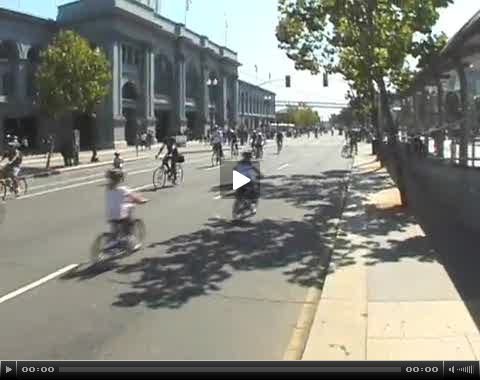
“Sunday Streets” delights bikers, frustrates drivers along Embarcadero

When the Chronicle ran a story about Mayor Gavin Newsom’s idea for “Sunday Streets” I was a bit skeptical.

I wasn’t so sure that we needed another street closure, especially on a Sunday when so many tourists rely on the Embarcadero to come downtown or to the piers to spend money in our City.

So I’ll admit I was surprised to find so many people participating in the second iteration of the Mayor’s “Sunday Streets” program when I went out yesterday to shoot this quick story. I wasn’t surprised, however, to find folks in their cars a bit peeved about the closure.

As I concluded in the piece, it’s a tough balance to meet the needs of all transportation modes in a shared City.

I’m happy that the City was able to pull this off without too many problems. I’ll be interested to see what happens next year — will they do it again? Will they extend the hours? Will they perhaps have better signage warning incoming visitors and regulars to avoid the Embarcadero?

Posted in politics, transit | Tagged , , , , , , , , , , , , , , , , , | Leave a comment

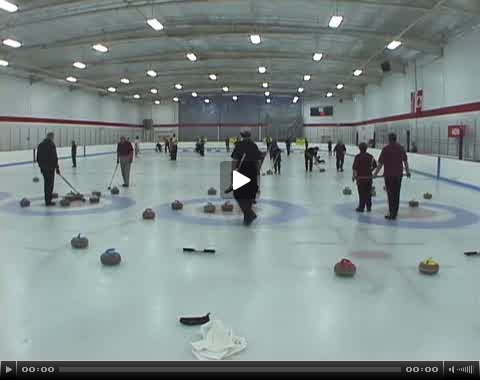
Tournament highlights renewed interest in curling around the Bay Area

Another video, this one was a bit more fun and easier than the taxi story…

Posted in happiness | Tagged , , , , , , , , , , | Leave a comment

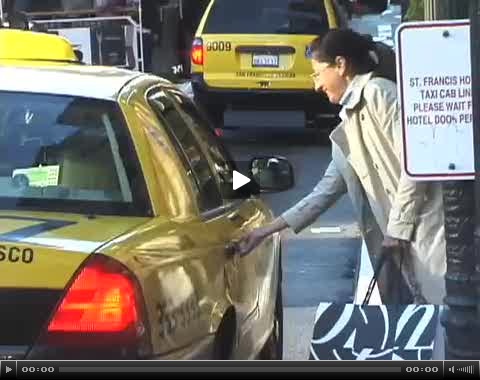
Cabbies face financial burden from impending Yellow Cab contract changes

I’m still new at this whole ‘reporting’ thing. This was my attempt at figuring out what was going on with Yellow’s contract change.

It’s rather long, and it’s rather boring unless you’re involved with the industry, but my goal was to be as objective as possible in presenting everyone’s viewpoints.

Posted in politics, taxi, transit, work | Tagged , , , , , , , , , , , , , , , , | Leave a comment

Thoughts on group ownership with unfunded startups

Good news! Steve and I finally released our website, VidSF.com, to the public.

More good news! We had a great initial meeting with content producers. We recruited them via craigslist and we made absolutely clear that a) we are unfunded and can’t pay, and b) we can’t provide equipment.

But, after this great meeting I am left with a tough puzzle. Given that we’re unfunded and can’t yet pay content producers a cut of ads that we don’t have, how can we treat them fairly? How can we encourage the vital sense of ownership that drives projects like these to succeed?

When I started a student TV station at Indiana University Bloomington, the idea of ownership was very, very different. The IUSTV entity was never intended to be for-profit. And, the IUSTV entity was a natural extension of the university system.

IUSTV’s non-profit and university affiliation gave each and every member a strong level of inherent ownership. An important fact to note, however, is that nobody, not even me — the founder, had any real ownership of IUSTV. Instead, this ownership was perceived given the organizational entity’s association with the University.

So, how can we achieve that degree of perceived or actual ownership with VidSF? Although VidSF isn’t an incorporated entity, Steve and I have personal intellectual property ownership of the platform code and design. The team members retain IP ownership of their video content.

But, how can we mix this together to achieve the nirvana of collective perceived entity ownership achieved with IUSTV? Could we offer partial ownership of a yet-to-be-formed for-profit incorporated VidSF entity? Perhaps, but it’s difficult to offer ownership when the yet-to-be-formed entity has no agreed upon valuation. Even if we know the value of a member’s hourly contribution, how can we convert that into a percent of a company with no real valuation?

What are other ways that real and perceived member ownership can be established in an organization?

  • Clear, honest and consistent communication from organization leaders. Check.
  • Shared community – physical or social. We’re working on this via frequent in-person meetings. Check.
  • Shared mission definition. Collaborative input on strategic direction. Check.
  • Honest and straightforward revenue share agreements. We’re working on this: We don’t have any revenue to share. We don’t yet know costs for increased traffic loads, which makes it difficult to peg an exact revenue share percentage. What if we have to go with a CDN and video delivery costs jump through the roof? This is scary.

Thoughts?

Posted in internets, media, tech | Tagged , , , , , , , , , | 6 Comments

When should public transportation systems be private?

A recent episode of Russ Roberts’ EconTalk podcast featured a wonderful intersection of interests: economics, public policy and public transit.

One of Russ’ academia friends, economist Michael Munger, speaks at length on the program about the public transportation system quality in Santiago, Chile before and after nationalization of their bus network.

Prior to 2007 Santiago’s surface transit was made up of a patchwork of thousands of independent, private bus operators. Operators specialized in niches ranging from neighborhood local busses which stopped at every block in a town to luxury express busses providing direct to city center service.

Since nationalization circa February 2007 the masses have expressed widespread complaints about the poor quality of the system. Wikipedia’s article on Transantiago sums up these complaints well:

The major complaints are the lack of buses and their inconsistent frequencies, missing or poor infrastructure (such as segregated corridors, prepaid areas and bus stops), the network’s coverage, and the number of transfers needed for longer trips.

I agreed in spirit that market based solutions can offer better outcomes than public, centralized planning in some situations. But, we shouldn’t get rid of public transit and city planning.

  • I do agree that in controlled situations, a market solution is better. San Francisco’s publicly owned and operated transit system is largely a failure, spurring reactions identical to those of Santiago’s newly nationalized bus system. Here, Munger and Roberts are spot on in their complaints of the stupidity of nationalizing a once private resource. (Remember, SF had a patchwork of completely privately owned transit lines until around the 1910’s. Everything I’ve read says these competing systems provided excellent service, especially given available technologies.)
  • But, I do not share Munger and Roberts’ idyllic view that free markets are the holy grail of public transport policy. Two reasons:
    • Just look at our suburban car-based communities. These communities are real life experiments in market based, unplanned transport and city zoning policies. These communities are a dismal failure.
    • While bus systems can arguably run with no government intervention, most other high-capacity transit systems need exclusive, government granted corridor rights-of-way, whether that be below ground subways, above ground rail corridors, or even fantastical elevated monorails. Like utilities, physical constraints necessitate government involvement to some degree.

Like many EconTalk podcasts, even if you don’t agree with everything, the discussion points a great alternative spotlight on conventional public policy views.

My favorite viewpoint: the entire concept of central transportation planning is communist at its core — an odd anomaly in a nation proud of its free-market ideology. Why should transportation “planners” dictate the best transportation routes? Our publicly owned and operated Muni is blind to the most powerful natural “planner” in the world: market feedback.

This viewpoint strikes me especially hard in the context of the impending Transit Effectiveness and the Geary BRT projects in the planning faces. With the TEP, the City is spending millions of dollars and years of research to accomplish what free market forces could do everyday, instantly, for free.

Link to podcast page (direct mp3 link)

Posted in econ, politics, transit | Tagged , , , , , , , , , , , , , , , , , , , , , , , | 3 Comments

Belated driving summary

Here’s a summary of my cab shifts from last weekend.

  • I picked up an older guy from the Kaiser. I’d guess he was 60+. I have a hard time judging ages, especially those +/-5 years from mine.

    He was heading back to his home in the Castro near the Seward Street slides.

    He’s gay. We talked a bit about that, especially about the recent hubbub surrounding legalization of gay marriages in California. “What’s the big deal?” he responded. “I lived with my partner for 40 years until he recently passed away. We didn’t need marriage to consummate our partnership.”

    He was still very affected by the recent passing of his partner. I acknowledged this sadness, but worked around it so it didn’t dominate our conversation.

    I prodded him and he spoke at length about the history of the Castro and gay bars around the City. Much to my surprise he mentioned the Castro as a gay neighborhood is a relatively recent invention. 50+ years earlier he remembered the Polk gulch as being the centerpiece of gay nightlife in the City.

    I live near the middle Polk neighborhood, so the rather prevalent gay venues I noticed in the area started to make more sense. From the Cinch gay bar to a gay photographer’s retail outlet near the Walgreen’s, Polk street still retains a lot of its gay heritage.

    My passenger continued to explain that upper Haight was the next stop on the tour, hosting a number of gay bars up through the 70s. The Castro as a gay haven developed most recently.

    We talked a bit about politics too. He was a huge Hillary supporter and rather worried about the seemingly ubiquitous Obama mania taking hold of young folks in the City.

    I was most impressed with his involvement in the gay community. He founded and continues to volunteer as a coach for a gay softball league. He did a few other community service things which I can’t remember now since I procrastinated a week to write this damn post.

    He admitted he was quite lonely with the recent passing of his partner, but his community involvement provides a wonderful and much needed regular social connection.

    I enjoyed our conversation and his willingness to openly share his emotional state and his knowledge of City history, especially with regards to gay culture.

    Thanks, guy.

  • I took a Chinese family to the Excelsior/Outer Mission district. As is usual with fares heading this way, I had no idea where I was going. Their limited English was effective, but difficult to parse at times. I had a few good natured laughs to myself as I asked things like, “Should I turn right up here?” only to be answered with, “No! No! Turn this way!” as they pointed right.
  • I took a bunch of lawyers from the Hall of Justice to their office in the Financial District.

    A couple things struck me as funny: as I was driving a van, the lawyers piled in. Thus, the vehicle held passengers whose combined yearly salaries most likely exceed $2,000,000. Yet, they entrust their expensive earning potential lives in the hands of unknown drivers. This is yet another good argument in favor of permitting of taxi drivers.

    I also found it worth noting that this $2 million taxi headed back through the Tenderloin, where we pass by pedestrians who make less in a year than the lawyers make in a day.

  • I picked up another older guy from the Kaiser. He was in a happy, happy mood, having just been let ‘out of jail’.

    He was in the Kaiser for 12 days. He complained at length about the TVs in the hospital, claiming they only featured Spanish speaking channels. It seemed odd to me, but he insisted it was all over the hospital — all Kaiser hospital TVs only have Spanish speaking channels. Who knew?

  • Sometimes I really, really have to pee, but I see people hailing. “I can’t pass up a fare!” I say.

    So I take them to their destination. Then I really, really, really have to pee. If I again encounter someone hailing before I can find a restroom, I’ll pick ’em up.

    Then, I really, really, really, really have to pee.

    I reached the four-‘really’-pee-alert level, but luckily no one was hailing as I sped toward the nearby Hyatt Regency and felt much better.

  • I picked up a Dutch family who had called for a vancab at their Fish Wharf hotel to head toward the airport.

    Funny enough, they had just come from Indiana. The younger son of the family had just finished a yearlong exchange program at a high school in Fort Wayne.

    We shared tales of our enjoyment and frustrations with Indiana life. We compared transportation options in Indiana, San Francisco and the Netherlands. The Netherlands win. SF is runner-up. Indiana didn’t even get an honorable mention.

  • I picked up a lady Tuesday mid-morning heading to her downtown job with a large piece of luggage. She mentioned she was heading toward the Oakland Airport later, what time should she get a cab? Did I want to take her? Based on her flight time, I thought she probably wouldn’t leave before my shift was over, so I told her to call dispatch and arrange a cab. But, when she called dispatch they suggested she get a cab quite early, early enough for me to have taken her.

    Hmm, I thought, this sucks. I could have gotten an easy $60 fare. So, I noted the cab appointment time in my head and planned on swinging by her office around that time when it was dispatched over the radio.

    Unfortunately I was a bit late from another fare. Another cab from our company was loading her luggage as I approached.

    But, here’s the funny thing: I ended up making more money in the 1 hour that remained in my shift than if I had gone to OAK. I wondered, does this happen more often than I realize? Maybe airport runs aren’t as lucrative as I thought? Closer to the truth, perhaps since it often takes so long to get BACK from the Oakland Airport it’s not really a super-great deal. Sure, if it’s early and quiet in the City, and traffic isn’t bad, an OAK run is great. But, late-morning, midday OAK runs may not be as lucrative as expected. Noted.

  • I picked up a couple at the top of Nob Hill heading out to a performance of the Stern Grove Festival. They were fun.

    After a few blocks, the guy asked me if he could open a beer in the cab. Of course! (It’s legal in San Francisco for passengers to drink alcohol in taxicabs.) He knew it was legal, but was politely asking as some drivers still frown on the practice. I don’t care unless the passengers are openly drunk already.

    They were Frenchies from Paris and we chatted a lot. Even with their prodding I was to embarrassed to speak much in French, but I understood them well enough. They were very encouraging and suggested I check out a wine bar on Polk where Frenchies regularly congregate.

    We also realized that we’re both neighbors — we both live in Nob Hill.

    This got me thinking: do I serve my neighborhood more than other cabbies? Probably yes. Is this a bad thing? Probably not.

    In the mornings Nob/Russian Hills are good spots for fare roaming. Radio orders and street hails are frequent. Many other cabbies hunt there as well.

    After 9 or 10am the Hills aren’t as busy. Sure, there are still orders, but other sections of the City start to light-up too, like downtown and even outer neighborhoods like the Richmond and Sunset. But, there’s something alluring to come back to my home neighborhood. It’s comfortable; I can dash in and go pee or get something to drink at home; I know the streets very well; I know where people queue for Muni lines off the beaten path; I know which Muni stops are likely to coagulate with annoyed, waiting passengers; I know where the rich folk are likely to hail; I know where tourists defect from the cable car mid-line stops.

    Perhaps most rewarding, it’s nice to meet my neighbors.

Posted in taxi, work | Tagged , , , , , , , , , , , , , , , , , , , , , , , , , , , , , , , , , , | 1 Comment

Adobe hands On2 a fat wad of cash in the form of proprietary video codec support.

As a form of advanced procrastination, I did a great deal of research on Flash video codecs this morning. I was spurred by reaction to a presentation I made last night where a young lady quite bluntly said, “You can do better [quality Flash video compression].”

The short answer: yes, one can do better than the status quo, but it costs money.

The superstar of Flash video compression is On2‘s proprietary VP6 codec.

Adobe’s Flash 6+ players support the standard “YouTube” quality Sorenson Spark (Sorenson H.263) codec. Most YouTube videos (and, for that matter, most online video sites) use a derivation of this codec.

Starting with Flash 8, Adobe’s Flash team decided to support On2’s VP6 codec. On2’s proprietary VP6 codec is a beauty when compared to files of same bitrate encoded with Sorenson. Here are some examples.

Here’s the rub: it costs nothing to implement a site using ffmpeg to convert media files into FLV video files using the older Sorenson codec. But, if you want to use VP6 On2 charges upwards of $3,500/year to use their codec via the command line which would support automatic server side encoding of videos.

There is, however, quite a complicated hack around this restriction. On2 used to release a free, personal version of the VP6 encoder for Windows which included vp6vfw.dll — a Video for Windows encoding library. Using some fancy hacks described here you can get mencoder to use the vp6vfw.dll on any platform, even via the command line.

Yes, it would work. But would On2 come a-knockin’?

And, why did Adobe agree to this arrangement? Is VP6 really the best format? (It does look nice!) Or did On2 work out a lucrative agreement with Adobe so they both get a nice chunk of that $3,500/year?

A nice link from VP6’s Wikipedia page shed light on some of these questions. Flash Player Principal Engineer Tinic Uro openly discusses why VP6 was chosen over H.264. (Many saw H.264 as a natural, open successor to Sorenson/H.263.)

Some choice quotes:

  • Quality. This is the first thing we looked at and our target was to eat least cut the bandwidth in half while keeping the same visual quality.
  • Legacy hardware support. It’s nice to have a new shiny video codec, but if it does not run on an older Macintosh what’s the point? Flash is about ubiquity, not forcing people to upgrade hardware or even require specialized hardware. Our target was a Pentium III 500Mhz and a Mac G3 running at 800Mhz.

It’s a pain to consider having to pay $3,500/year for a video codec. (Completely out of the question for now.) But, VP6 sure does deliver a beautiful product.

[EDIT 6/20/08]: After the below comments, and reading this thread which links back to this post, I think the headline should instead read, “Adobe hands On2 a fat wad of cash. On2 throws it away.”

On2, you have a pricing problem. A fixed cost ($3,500/yr) for your server product is silly. Here’s a better answer: let me use the codec for free, we’ll call this a “development version,” and come back and charge me if I’m actually able to make a successful website using your product.

If I’m successful, then I would be happy to pay MORE than $3,500/yr, especially if your codec is responsible for building a multimillion dollar business. Instead, given your current pricing structure, I’ll develop my website with H.264. If the site is a success, you won’t see a dime.
Posted in tech | Tagged , , , , , , , , , , , , , , , , , , , , , , , , , , , , , , , , , , , | 4 Comments

Taxi driving: conferences + tourists = seasonal demand

My shifts were busy and lucrative this past weekend. Two big conferences were in town: the Apple WWDC and some sort of diabetes convention. Two special events — the Haight Ashbury Street Fair and the Escape from Alcatraz Triathlon — also brought in many regional visitors.

  • Sunday and Monday earnings were far above average; I earned a bit above $200 both days.
  • I heard another cabbie complaining about the radio with the cashier. I understood the source of his anger, but also realized that the cashier couldn’t do anything about it. Maybe the cabbie should start a blog.

    Here’s the deal: an analogue radio dispatch system is imperfect. (I’ve written about analog radio dispatching before, look about halfway down this page.) But, also imperfect is the computerized* dispatch system used by the top two companies cab companies by fleet size, Yellow and Luxor. While I’ve never driven a computer dispatch cab, I still acknowledge that computerized dispatch lacks some of the key advantages of analog radio dispatch:

    • Analog radio dispatch is usually hands free unless you’re keying the mic to make a call, whereas computerized dispatch requires driver input to review calls, see calls in other areas, etc.
    • Analog radio frees cab operators’ eyes for the most important task: driving. Computerized dispatch requires operators to look at a small, poorly backlit, dot-matrix LCD screen while roaming the road.
    • Analog radio allows cab operators to passively receive data about cab demand at all parts of the City. Computerized dispatch only pages orders within a smaller geographic area, darkening a cab driver’s radar of demand for cabs in other City neighborhoods. Many times I’ll hear about a large party with many cab pickups across town that nets me a nice run (or even two)!
    • Analog radio requires significantly less fixed and per-vehicle capital outlay and maintenance costs.

    The most common imperfection with analog radio is actually a mix of technology failure and dispatcher error: not being heard (“read”) by the dispatcher when checking-in for a radio order.

    Usually this happens when my cab is beyond significant hills such as in the Marina or North Beach, where my lower power FM transmitter doesn’t quite reach back home at dispatch. But, sometimes a stressed dispatcher doesn’t (or can’t) take the time to acknowledge every cab that checks-in, especially when the City is slow and too many cabbies are desperate for orders.

    At these times, like that driver at the cashier window, I get really pissed off at the imperfections of the analog radio. The best strategy I’ve found for this is to yell really loudly in the cab. Choice phrases include, “DAMMIT!”, “F**K!”, or yelling the dispatcher’s name very loudly. Doing so actually brings a smile to my face and lets me continue hunting for fares.

    Some drivers simply take the order even if they weren’t properly checked; I don’t do this. If I’m really desperate for orders, and I’m very close to the call, I’ll radio the dispatcher to let them know I was probably the closest but wasn’t heard during check-in.

    *(Lingo check: the cab industry uses the colloquialism ‘computerized’ dispatch, whereas the mobile IT industry uses the term Mobile Data Terminal which also describes the computers used by police and other mobile vehicles.)

  • I had a few Frenchies in quick succession.

    I picked up a guy from the Castro who wanted to head to the Civic Center BART station. I feel comfortable now digging a bit deeper to optimize rides, so I found out he wanted to go to the airport and suggested heading to the 16th Street BART station which was closer for us, and closer to the airport for him.

    I can usually pick out even slight German or French accents and heard a tint of French on this guy’s voice, so I asked if he was French. He was and tested my French with a few questions. He loved San Francisco but work requires him to live in LA. He and I agreed that SF is the closest to Europe one may find in the USA.

    He was from the south of France which sparked my interest as an old friend from Scotland is also. When I visited my French friend and his family I had a blast playing a game similar to bocce ball, but I couldn’t for the life of me remember the real name. My French friend kept referring to it as ‘boule’ (ball). (This caused a great deal of translation humor as he kept suggesting in English that we go play with his balls.) My passenger revealed the mystery game: Pétanque.

    I really appreciated the passenger bringing back those fun memories.

  • I came across an older guy at Sutter and Leavenworth looking very confused hailing a cab. With very broken English he mentioned he and his daughter needed to get to Pier 33. His eyes lit up when I clarified Pier 33 in French. He seemed much more at ease as they piled in the cab and we headed up Leavenworth. Since my French is so bad now usually I’ll speak in basic English while the passengers speak in basic French. This worked out well.

    As we headed past the curvy portion of Lombard Street I offered to stop for pictures, but they had already walked the hill with cameras. A few blocks later the dad asked with a grin, “Well, maybe we can drive down it?” I laughed and readily accepted. I love driving down Lombard Street! Of course, it’s a great way to stretch a fare, but it’s also a beautiful street and I enjoy soaking up the view of our City through the eyes of visitors. I drove down Lombard safely but still quick enough that the rapid changes in centrifugal force from the tight turns was noticeable.

    I was honored that when we arrived at Pier 33 they felt comfortable asking me what was a fair tip. European foreigners aren’t always accustomed to tipping and sometimes won’t give me a tip at all, not out of spite but simply due to the lack of understanding of the importance of tipping toward my income. The fare was $10 and some change so I told them with a $20 to hand it to the driver and ask for $8 back if they had a good ride.

  • I took two Japanese girls to the Moscone Center for the keynote speech by Steve Jobs at the Apple WWDC. They were excited to hear about the new iPhone. I was amused when one answered their phone and said, “Mushi mushi!” I didn’t realize they actually said that in Japan, thought it was just kinda a joke.
  • I took a nice young lady to her event marketing job in SOMA. We talked about our jobs and making ends meet in the City. I realize that I make an erroneous assumption that my passengers always make more than I do. I told her my average take-home and she was surprised, saying it was significantly more (per hour) than she makes right now. I have to keep that in mind.
  • Tuesday was an odd day — the radio was very busy with constant radio calls, but they were spaced far across the City and above average traffic made it difficult to get to the calls quickly.

    As I was heading out on Market toward numerous radio calls in the Castro and Upper Market I ended up behind two other cabs from our company. I let them check-in first for the calls we were approaching, then I realized there were no more radio calls left in this direction! Crap!

    I decided to keep going a few more blocks to Market and Castro where street hails are common. I lucked out — two guys were hailing at a motel, heading out to the Oakland airport. We had a great conversation about everything from gay marriage to the hot Texas weather. They tipped me an insane $25 on top of the $50 fare. Thanks, guys.

  • On the busy Sunday after dropping in the outer Richmond I snaked back on Geary looking for Muni exiles or other street hails. Around 30th I found a guy in his late 20s emphatically hailing. I didn’t realize until a minute or so into the ride how drunk and high he was. It figured — he was heading toward the Haight Street Fair.

    My strategy for drunk folks, especially drunk AND high folks, is to maintain positivity during the entire ride. Laugh off insults or strange tangents and keep the conversation positive and upbeat. This seems to keep the passenger comfortable and minimize anger or uncomfortable feelings.

    This guy was really, really, really out of it. I’ve been there before too, so I understood that his thoughts didn’t connect very well to his speaking parts, so I accepted the odd ramblings as poor surface-level representations of his inner thoughts and feelings. This frame of reference allowed both of us to have a positive interaction.

  • When I dropped him at the Haight Street Fair I knew, knew, there were numerous street hails to be had in the area. But, I still left as fast as possible. Why?

    Traffic was awful. Haight was closed between Masonic and Stanyan, including all cross streets. True there were folks somewhere in the large area between Masonic and Stanyan, Waller and Page streets that needed a cab. But, to wait through traffic would take forever. It is in my self interest to leave as fast as possible and find other areas of town to get fares — like the nearby street-hail-heavy Castro or other radio orders in the area.

    This is a problem: my incentives push me to leave an area where folks need cabs. One possible solution: enforced, clearly publicized taxi stands in traffic accessible areas. If there were publicized taxi stands at either end of Haight (at Masonic or Stanyan) potential customers and cab drivers alike could dispense with time wasting hunting and find each other more easily. This would allow cab drivers to dash-in without getting caught up in the Waller/Page stalled traffic and dash-out. Just a thought.

  • I picked up three drunk Mexican guys around 6am Sunday morning. I was impressed at their ability to drink so late. Surely, I thought, they had finished their night shift as a bar back and had only been partying from 3 or 4am.

    While we stopped at a 7-11 for them to pickup more beer, one guy stayed behind. He looked pooped. He told me they had started at 5pm the day before. He was dead tired. But, his friends were still partying and he seemed to feel a strong duty to continue partying alongside. Wow.

  • I picked up a radio call in the deep Marina. I picked up a nice PR-type corporate guy and took him toward his downtown office. We decided against the Broadway tunnel as traffic was usually bad around 9am and there was construction which made it even worse.

    So, the only other main road was Bay which is a high capacity 4-lane road above Russian and Telegraph Hills. As we were stuck on Bay with slow, solid traffic traveling at an average of 10mph two parts of my brain were firing:

    • One part said, wow, this is pretty awesome. It’s a beautiful day in San Francisco. There are great views of the bay, the Golden Gate Bridge, the sky is blue, the wind blows with a nice cool tinge. I’m listening to NPR, driving in a world-class City. I’m paying rent, working on a website, doing what I please. It’s a beautiful day.
    • The other part was depressed: here we are, a world-class City and there is a traffic jam at 9am filled with single occupancy BMWs, Mercedes. Is this really the best transportation option the City can provide? Is this the best us humans can come up with?

      I thought back to the rail tunnel that once connected a streetcar from Jefferson at the Fisherman’s Wharf to the Marina District, heading under Fort Mason. Now it’s closed.

      Is there no modern transportation solution the City can provide that will provide >10mph average speed for its residents? Is this really a difficult situation to address? This isn’t rocket science. We can manage to put a lander on Mars to study for signs of life, send humans out to a man-made space station in Earth’s orbit, yet we can’t create reliable commute options to transport City residents the 3 miles from home to work at speeds greater than 10 mph?

      What a shame. Shame on the City, shame on the United States for its negligence to properly invest in non-personal-auto transportation options for its citizens, especially in the second most dense city in the USA. Now that oil is so expensive, our under investment in non-auto is glaringly clear.

      A solution? President Obama, you should create a next generation “New Deal” that reinvests in America’s aging transportation infrastructure. Our universities pump out amazingly skilled young people, only for them to be placed behind a desk shuffling papers. Put them to use fixing our dams, bridges, and creating real transportation options that don’t force the poorest of the poor to spend the highest percent of income on transportation. Will this cost money and increase debt? Yes! But this is a GOOD form of government spending that has positive future returns, unlike wars in foreign countries. [/rant]

Posted in taxi, work | Tagged , , , , , , , , , , , , , , , , , , , , , , , , , , , , , | Leave a comment

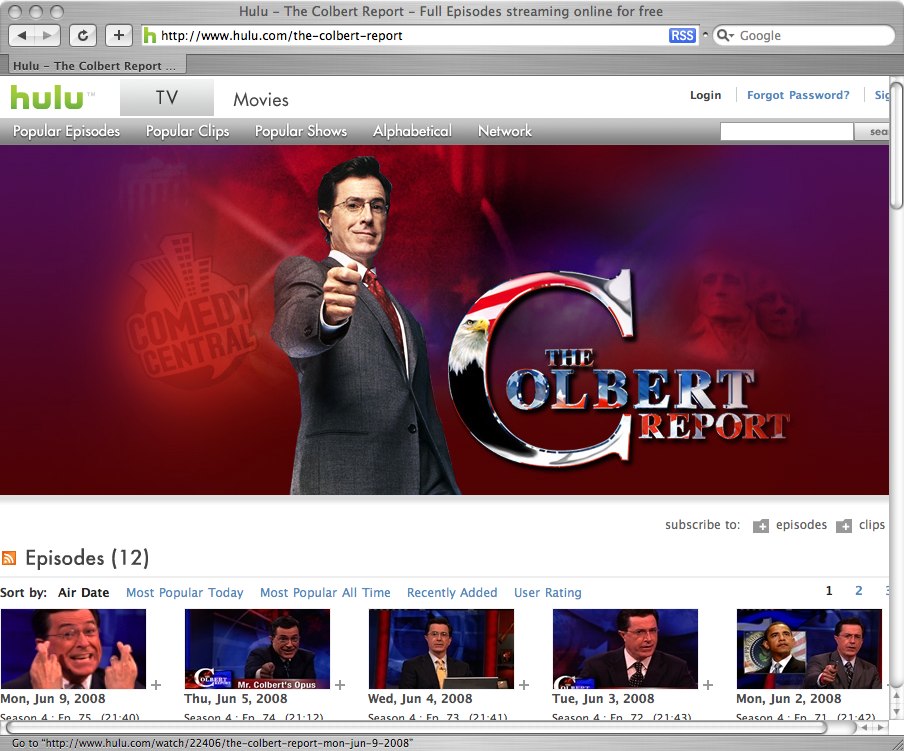
With Daily Show and Colbert, Hulu takes the trophy. Joost dead?

The Colbert Report on Hulu

When NBC and Fox announced their ‘me too’ online video joint venture, Hulu, I was understandably skeptical. After all, Joost had already launched to much fanfare with top partners like Viacom’s MTV and Turner’s Cartoon Network. YouTube had quite a niche already, and I satisfied all my TV time-shifting needs via BitTorrent.

“What would the big ol’ networks know about online video?” I thought. Evidently, they know quite a bit. Unlike the record industry’s litigious reaction to music downloads, Hulu is now a shining star of acceptance and business model revolution on the part of the TV industry. Bravo!

Boy, did Hulu get it right. Why did millions of folks download TV illegally? (And why do people still download music illegally?) Because it was cheaper and easier than ‘purchasing’ the legit product, traditional TV. Traditional TV is annoying — you have to sit in front of a box in your living room at a specific time and 1/3 of the time you’re sitting through ads.

Hulu tipped the scales just far enough to make high quality, instant streaming video of premium TV shows available to end-users. It is significantly more convenient than BitTorrent, which required 1-2 days of turtle-speed downloading, and it’s legal. AND, it’s even better than regular TV! While traditional TV ads drive me crazy (four minutes of ads per break is excessive), Hulu maxes out with at most four ads over the entire length of the video. And, of course, I can watch Hulu content whenever I want.

Now, Hulu just hammered the final nail by offering recent episodes of the Daily Show and the Colbert Report. With Colbert, Daily Show, The Office, Simpsons and the Family Guy, Hulu proves content is king. I’m a believer.

What happened to Joost? Two major factors come to mind:

  • Joost required a proprietary, closed-source client (a la Skype per their founders), a step that turned off many users and just plain excluded many — no Linux or Mac PowerPC Joost client has been ever released. Hulu is open, not platform dependent and requires nothing more than a browser with a recent version of Flash.
  • Joost’s content sucked. Which is a bit odd, especially considering their prime partners like Viacom and Turner. Funny that NBC/Fox’s Hulu was able to score Viacom owned Daily Show/Colbert content, even though Viacom is an investor in Joost. That should tell us something.

Link:

Posted in internets, media | Tagged , , , , , , , , , , , , , , , , , , , , , , , , , , , , , , , , , , , | 2 Comments

Driving: Lawyers, reporters and crackheads, oh my.

Sunday was a busy and good day, buoyed by City events and nice weather. Monday and Tuesday were a bit slow.

  • As usual, I picked up a few lawyers going to or from work. (Work seems to always be the destination or origin for lawyers in my cab.) One lawyer was late for work but needed to pick up her dry cleaning first. She hadn’t been able to pick it up in 3 weeks because of work.

    Both hadn’t yet paid their student loans. This is one of my standard lawyer questions now, “Have you paid off your loans yet?” I’m surprised at the frequency of the answer of “No.” Perhaps those that have paid off their loans no longer identify as being a lawyer?

    One had a strong desire to change from commercial law to being some sort of public defender after paying off loans. The other seemed happy where she was.

  • I picked up a lady from a hospital in an outer neighborhood. She was heading back to her apartment downtown.

    After a few minutes of standard opening chat I learned she had lived in the City for many decades and lived through the 1989 earthquake. I hadn’t talked to other passengers about this yet, so I asked her what it was like. To my surprise she had quite a story.

    She had been heading back west toward the City over the Bay Bridge. She felt the quake as she was approaching Yerba Buena Island. Her car swerved and she described the feeling like her tires were melted rubber, or something to that effect. She came to a stop, as did the few other motorists around her. She wasn’t sure whether or not to continue, but figured it’d be safer to get off the bridge than wait for aftershocks to knock it down. She kept heading west and was happy to hit solid ground. She drove through the City back home, noticing the wreckage. Back home people asked her how she got through — they had seen on the news that the Bay Bridge had collapsed. She was stunned — she missed by just a minute that section of collapsed roadway to return home. She was one of the last people to successfully cross the bridge after the quake.

    I know luck is a human construct in a feeble attempt to rationalize chance, but I thought and said, “Gosh, you sure were lucky!”

  • Early Monday morning, around 4:30am, I was in my standard ‘Marina early morning radio hunting mode’. Along with a sizable chunk of the rest of the cab fleet, I hunt around for fares on Polk, Union and Fillmore Streets while monitoring and checking-in for radio calls in the area.

    As I was turning from north bound Van Ness to west bound Lombard to position for some deep marina radio calls, I heard a guy yelling for a cab at the hotel on the corner. He was a white guy in his late 30s, with facial hair classifiable as ‘stubble’, wearing a giants cap.

    I could tell from the start he was an odd character, but I had a hard time then (and still do now while writing this) identifying the particulars off his oddness. First off, he was heading to the Tenderloin from his Marina hotel at 4:30am. That’s odd. Well, it’s not really odd, it just means he’s picking up drugs.

    RE: Drug policy. I don’t want to know about it, I don’t want to see it, I don’t want to hear about it. But, if someone heads somewhere to “pick something up from a friend”, I have no real qualms about the object they’re actually up-picking. As long as they don’t take too long I don’t really care what they do. Usually drug runs are good runs — we head quickly to a destination across town, they do some sort of business, then we head right back. It’s a quick $20 or even $30 depending on distance and tipping.

    When we arrived in the Tenderloin he didn’t know exactly where he was going, changing his destination once or twice. (This is always a bad sign.) Finally he found the right corner and he said he had to go pick up a ‘diskette’. Okay, whatever. He runs across the street and around a corner. I see him appear again in a minute as he runs across to the diagonal corner, gets money from an ATM, and then disappears around the corner again.

    About this time a smartly-dressed young black guy comes up to my cab, with iPhone in hand, and asked for a ride. I explained that I was waiting for my passenger to pursue a transaction and then return to his hotel. I’d be happy to take him if I wasn’t taking somebody else. This guy wouldn’t have it. He tried all sorts of persuasive verbal techniques to let me take him, “I’ll drop you $10 right now and we’ll head up. I’ll pay for this guy’s fare. Let me just share a ride with him back to the hotel and you can drop me at my place.” His insistence was impressive and we had a nice ancillary chat about the relative ‘roughness’ of the Tenderloin vs. other economically depressed cities’ ghettos. Our shared thesis: the Tenderloin is rather tame.

    But, upon arrival of the original passenger sparks flew. The passenger got in the cab and the younger guy kept asking to share the ride. I asked the original passenger and he said, “No, let’s head to the hotel.” The original passenger looked very, very uncomfortable. The young guy started insulting the passenger and vice-versa. Perhaps I should have left before that started, but at this point I said, “Goodbye, nice to meet you,” and took off.

    The passenger was irate. “How could you let that guy talk to me like that?”

    He soon calmed down and went on a different track. “Let’s get something to eat. What’s open right now?” I mentioned I’d be happy to drop him off at the 24 hour IHOP down the street from his hotel. No, this wouldn’t work. He specifically needed fast food.

    At this point my passenger’s lack of focus became clear. He wasn’t making rational decisions, especially with regard to my time. He was just spouting off random things he wanted to do. “I need some cigarettes. Can we stop by a 24-hour market?” “I’d even be happy with a Taco Bell. Is there a Taco Bell around here?”

    “How about I just drop you back at your hotel — there are a few gas stations open around there.” This satiated him enough for a few more blocks. At this point I learned another fun fact, he was leaving the country with a quarter of a million dollars in the bank to go see the world. Wow. How’s that for odd?

    Finally we arrived back at the hotel, but, of course, by then his cigarette need resurged. “No, no, let’s go to the gas station down the block. It looks open.”

    I grudgingly accepted — the station was within sight after all. I dropped him off and he wanted me to stay to take him back to his hotel. (Yes, his hotel two blocks away.) I told him I couldn’t keep running around doing errands and expect to make any money. This was a true statement — this run was taking too much time. And pursuing errands with an erratic drug addict is not my idea of a fun time. He was pissed again, “I just don’t get the cab drivers in this city! You can’t just wait a few minutes? I’ll pay you for the metered time!” He paid just the meter, no tip, around $12, and I wished him luck on his trip and offered an apology.

    Looking back on the story of this fare, I realize it’s a bit confusing. I wish I could revise it to make more sense. But, perhaps it’s a good reflection of events — he was a confusing, confusing guy. His actions and requests were individually logical, “I’m hungry, let’s get some fast food,” but collectively irrational, “Let’s head back and forth across the City as each of my needs — food, drugs, nicotine, etc — wins in priority at any given moment, without attention paid to the external world.” I’m not sure if this state was induced by a long history of drug use, drug use at that very moment, or an inherent personality trait. But, I was happy to have him out of my cab.

  • As cab driver turnover rate is rather high, I see new drivers often and don’t give it much thought. One new driver, however, happened to engage me in conversation at the cashier window and we started chatting as we headed out of the garage after our shifts.

    I was glad I spoke with him. He had been a cab driver in Chicago many years back and commented that all the cost drivers — gate, gas, and the meter — seemed to have increased proportionally such that earnings are the same as before. But, considering inflation, real earnings are significantly lower. (That is, earning $150 a shift in the 70s was worth a lot more than it is today.)

    He is also a ham radio enthusiast and we spoke at length about the radio dispatch system used by the cab company. As I had guessed, there are 2 separate radio frequencies allocated to the cab company by the FCC — one for the dispatcher and one for the cab drivers checking-in across the City. He explained that they are both frequency modulated (FM) channels around the 150 MHz spectrum. (Remember, your favorite FM radio station is in the same ball park, 88.5 KQED is 88.5 MHz.)

    A neat feature of FM over AM is that the strongest broadcasting FM station will drown out other lower-power FM broadcasts on the same frequency. For some applications, like cabs checking-in for an order, this is desirable behavior. At least one cab will be heard clearly, while others are drowned out. This process is repeated until no cabs are left checking-in. During each check-in, at least one cab will be able to clearly check-in. Competing AM broadcasts bleed such that receivers hear a mix of all broadcasts. While not ideal for the application of cab dispatching, it is well suited for, say, emergency channels where you want to absolutely be able to hear any broadcaster calling for help.

    Thanks, driver, for the cool info.

  • I crested Taylor Street at California looking for fares Tuesday morning. I saw empty cab after empty cab heading outbound (west) on California toward the neighborhoods where fares are likely. Had those cabs not been there, I would have headed outbound on California at this point as well. But, I crawled northward on Taylor past California and saw a potential jackpot — a guy crossing the street after leaving his Nob Hill apartment with airport-bound luggage.

    Had I just started driving a cab I would have naively left him since he wasn’t doing a traditional “hail.” But, I could tell he needed a cab: he wasn’t waiting for the 1-California on Clay to take the BART, he wasn’t waiting for another cab at his house, he was walking with a purpose toward California Street where he would surely find a cab. So I pulled next to him, made eye contact, and scored a $45 fare to SFO.

    Of course, by no means does this learned skill make cab driving a lucrative profession. But, it sure does help on a slow Tuesday morning.

  • I picked up a van call at a Fisherman’s Wharf hotel. A Filipino family was waiting for me as I pulled up. They were heading to Mill Valley in the North Bay.

    This was a great trip. I love out of town trips. Not only do they pay well, but it’s a pleasure to see other parts of the Bay Area, especially beautiful drives like the SF to Mill Valley drive.

    I learned the family was emigrating from the Philippines to Canada. They were very excited at the move except for the cold Canadian weather. They tipped me well and I had a beautiful drive on a beautiful day. Thanks, family.

  • I picked up a group of reporters at a low cost hotel in ‘TenderSOMA’ where the Tenderloin’s trademark seedy feel extends below Market Street, especially west of 5th Street. I took them to the BAVC where they were meeting with other documentary filmmakers and reporters.

    One of the guys in the front worked for Frontline World which sparked an interesting discussion. I had met another Frontline World employee at a journalism meetup I attended to promote a website I’m developing. This led to a long discussion about the website I’m making and my motivations for making it: namely, the failure of local media to evolve with media consumption habits of persons under the age of 30.

    At a certain point we realized we were having an excessively cliche “San Francisco” moment: a part-time cab driver and ‘startup’ wannabe having a chat with visiting reporters about the failure of local media to evolve at the same pace as technology. And, to pour salt in the wounds, we both mentioned we’ll blog about it afterward. Ouch. It’s like something out of an Onion headline: “Blogging cab driver blogs about blogging passengers.”

  • A few staff members at the cab company mentioned they heard about my blog. Hi, fellow cab company staff members and/or drivers.
Posted in media, taxi, work | Tagged , , , , , , , , , , , , , , , , , , , , , , , , , , , , , , , , , , , , , , , , , , , , | 3 Comments