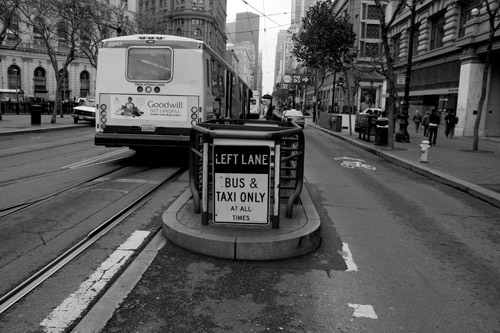
TEP proposes good things for Muni. Is this good news?

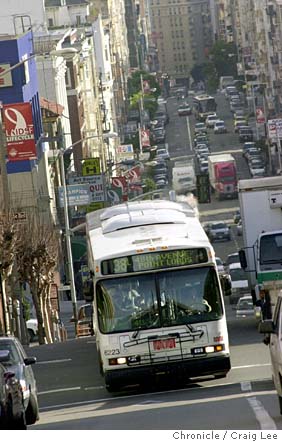
38 geary

A week ago the Chronicle reported on some promising preliminary recommendations based on findings from the Transit Effectiveness Project (TEP).

These recommendations are great. In many ways they are in line with common sense: improve highly used lines using BRT, ditch under-used lines.

Aside from the frustrating fact that it took Muni 40 years to figure this out, let’s focus on the positive: at least someone realizes what to do next.

But, I have a hard time being excited about these proposals. I cannot hide my fear that Muni is barely capable of managing its own operations, let alone managing a system-wide overhaul. They just can’t do things right.

This is an agency that claims multiple times in press releases and at public information events that they can’t seem to hire enough bus drivers. Yet, they don’t post bus operators as an available job on their website. (I would know too — I’ve looked many times, pushed by a perverse desire to drive a bus in the City.)

This is an agency that spent nearly a billion dollars to replace a bus line (the 15) with a light rail system (T-Third) that offered barely any noticeable improvement in service quality, or, by many accounts, a decrease in service quality.

This is an agency that has virtually zero accountability over its ground-level workforce due to extremely onerous union negotiated contracts. They can’t even immediately fire operators after they’ve killed innocent pedestrians.

This is an agency that, to operate most efficiently and implement changes suggested by the TEP, needs absolute access priority over roadway design and right-of-way for its transit vehicles. So far, no evidence has been shown that Muni’s merger with DPT has provided this level of absolute priority. Nor have the actions of the Mayor nor the Board of Supervisors shown that they have the interest or even the ability to offer such priority for our dear Municipal Railway.

So, rock on TEP. Just don’t write checks you can’t cash.
Link

Posted in happiness, politics, transit | Tagged , , , , , , , , , , , , , , , , , , , , , , , , , , , , , , , , , , | Leave a comment

A great intro guide to version control

version control guide

Through work on a pet project I’m getting quite a crash course on making a web app with guidance from my friends Jay and Steve.

Jay has rightly pushed version control upon us so we can start working like real programmers. I pushed back for a bit, not really understanding what the deal was.

It took some digging, but I finally found two great guides to version control.

This “Better Explained” guide by Kalid Azad is a perfect high-level abstract overview of version control and why it’s necessary, especially when working with others on a project. I Googled for about 30 minutes one day while going crazy trying to learn version control. This page is the best by far.

This guide is a nice literal, code based followup if you’re going to use Subversion.

Posted in internets, tech | Tagged , , , , , , , , , , , , , , , , , , , , , , , | Leave a comment

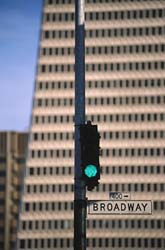
“Hacking” traffic signals in the City

sf traffic light

Driving so many hours in the City offers a lot of time for thinking, especially thinking about driving.

I put a lot of thought toward the question: How can I reach a destination most quickly?

The answer is rather complicated, much more so than it may appear at first glance. It’s not just about distance. It’s about traffic. It’s about roadway capacities. It’s about speed limits. But, often the most important factor is traffic signal timing.

When I drive between midnight and the morning rush, which starts around 5 am, there is virtually no traffic. Or, to be more specific, traffic congestion is beneath a threshold such that all traffic signals in the City will completely clear within one signal cycle.

It is during this phase between midnight and the morning rush where you can explore the naked signal cycles with the traffic variable removed. It is great fun.

I start to develop intuitive (implicitly memorized) and non-intuitive (explicitly memorized routes) maps of signal timing, especially on frequently used routes. And, soon, I began to develop traffic signal ‘hacks’, ways to slip through long strings of intersections.

The first ‘hack’ I found is when I’m driving south on 8th St to get to the 6th St 280 on-ramp. Heading south on 8th St, most people would turn left at Bryant to get to 6th St for the 280 on-ramp. But, you’ll get stuck on at least one light (7th/Bryant) and maybe another (6th/Bryant). Instead, while you’re on 8th St as soon as Harrison turns green, gun it and pass through Bryant. You’ll just barely make the green to make a left on Brannan, head through a green that turns at just the right time at 7th/Brannan and hit another green to make a right on 6th. (Just watch out for the Highway Patrol station at 8th/Bryant.)

[EDIT 6/10/08: This doesn’t seem to work anymore. The light at 8th at Folsom stays red longer now, making it impossible to reach a green light at 8th and Brannan unless you had a Ferrari and floored it.]

My friend Steve showed me a nice ‘hack’ to get on 101 from Gough. If you’re heading South on Gough, most people take Fell to Octavia to the 101 on-ramp. But, during the morning rush you can bypass a signal cycle or two if you continue on Gough past Fell and instead take a right on Haight which is the last street from which you can turn onto Octavia and the 101 onramp, bypassing a few blocks of heavy traffic.

Signal knowledge combined with estimates of traffic congestion make the acquired knowledge of City taxi drivers rather valuable. Which calls into question this story I found about F1 driver Michael Schumacher taking the wheel of a taxi in Deustchland to make a flight on time. It may work between these small villages where speed is the primary factor. But, it would never work in the City where the key to the fastest time between point A and point B is not pure acceleration, but instead requires an intimate knowledge of signal timing and traffic congestion.

Do you have any other City signal hacks?

Posted in taxi, transit | Tagged , , , , , , , , , , , , , , | 5 Comments

Driving

  • My shift starts around midnight. I usually eat ‘breakfast’ around 1 or 2am if it’s slow. I’ll sit in line at the 18/Castro unofficial taxi stand, at the 24-Divisadero bus stop, and eat a slice of pizza for my first meal. This time an Indian guy came up to my cab, completely drunk, and demanded to know how to get to 9th and Mission.

    I pointed in the cardinal direction and said, “It’s quite a bit that way, but I don’t think you’ll want to walk. Would you like directions?”

    “I WANNA GO TO NINTH AND MISSION.”

    “I understand. It’s that way.” I pointed, “Just walk up one block to Market, take a right, walk to Ninth, then take a right.”

    “HOW DO I GET THERE?”

    “I just told you. I’d be happy to drive you if you wish.”

    “I DON’T HAVE ANY MONEY, CAN YOU STILL TAKE ME?”

    “That’s not how this works. I’ll take you if you pay me.”

    “AREN’T YOU GOING THAT WAY ANYWAY? CAN’T YOU JUST TAKE ME?”

    “No. Go that way.” I pointed again.

  • I picked up a lady in the Richmond and took her to a hospital in Pacific Heights for an appointment. I would guess she was around 75. She had lived in San Francisco all her life. Of course, I took that opportunity to chat about how the City had changed over the years, especially with regards to Muni. We talked at length about how Muni was one of the best public transportation systems in the USA, and perhaps the world, until its downfall when it merged with a private operator and the growth of the personal auto led to the progressive disintegration of the once-mighty San Francisco transit system.
  • I received a radio call for a retirement community near Post and Geary. I showed up and there were many older ladies waiting for a cab. It turns out that their shuttle which normally takes them from the retirement home to the hospital wasn’t operating that day — the driver called in sick. So 3 older ladies stuffed in my cab and chatted about their healthcare plans, their doctor appointments for the day, and their respective doctors and specialists. It was an interesting insight into their lives.
  • Monday was a slow day. I was looking at heading home with less than a hundred bucks, not a good performance relative to my historical Monday performances. But around 11 am, 2 hours before my shift ended that day, I answered a radio call which happened to be an airport. When I came back to the City I answered another radio call — it was an airport. Coming right back I answered a call on the highway — tough to do unless it’s crazy busy — it was another airport. It upped my total closer to $200. 3 airports in a row. Nice.
  • I picked up 2 guys late Sunday from the Castro and took them to their downtown hotel. They were from the South, somewhere in Louisiana. One of them complained to his companion at long lengths regarding the lack of attractive and nice guys in San Francisco, a severe disappointment considering the City’s LGBT reputation. When I pulled up to their hotel and turned on the interior lights so they could pay, they exclaimed, “Finally! The one cute guy in San Francisco!” I realize they were rather drunk, but I really appreciated the compliment which seemed genuine.
  • Late, late on a dead Monday night (Tuesday morning), say around 4 am, I picked up 2 guys in the Castro heading back to their place in the Outer Mission. They were a bit high and talked about freaking out while high in cabs and the importance of having a good connection or ‘feeling’ with the driver.

    I understood exactly what they meant. I had a bad cab experience with my friend once. We were coming home from the Mission back to his place in Pacific Heights. We were both quite tipsy and a bit high and the combination of both made us wary of the driver. He took a very odd route, which I realize in retrospect was technically the shortest distance but was extremely slow. The driver spoke poor English and didn’t explain his actions or his route. We felt as though we lost control. Those feelings mixed with alcohol and marijuana become severely exacerbated.

    I strive to make my passengers as comfortable and ‘in-control’ as possible. I confirm the destination as we depart and finally when approaching. I confirm the route and offer options if there are clear decisions between speed and cost. Most of the time they’ll say, “It doesn’t matter, whatever works for you.” But, I’m convinced that even if they say it doesn’t matter, just having that option makes people feel so much more comfortable and ‘in-control’. And, as a driver, that makes me feel much safer and more comfortable.

    These guys agreed.

  • On tipping: I get pretty good tips. I am constantly surprised by the disparity of tipping between people. It is tough to predict. I really appreciate tips when it’s slow in the City, if I’ve provided a good, safe and comfortable ride if you have the cash. But, if you’re short on money I understand. I don’t feel offended when guys or gals that are late and head for a part-time or hourly paying job don’t have the extra cash to tip, especially if they’re polite and treat me well. I’ll round down when I give them change and sometimes, if it’s been a good day, say no tip is necessary (especially when it’s a cross-town trip).
  • I took a lady downtown to work from her Pac Heights apartment at the peak of morning rush hour. I was worried that she would be frustrated by the traffic, especially as Bush Street approaches Battery and it crawls. But, we spent the time talking politics. Obama vs. Hillary. Should Nader even run? Did Ron Paul have some good ideas?

    I realized as I dropped her off that she was helping ME deal with the frustration of the traffic. It didn’t seem to affect her. (It’s not like she was in the car for the 9 hours preceding.) Thanks, lady.

Posted in taxi, transit, work | Tagged , , , , , , , , , , , , , , , , , , , , , , , | 4 Comments

Politicians forget (ignore?) basic economics.

Oops Migden Sandoval

Let’s rewrite a few headlines to illustrate the point.

Case 1

The original headline reads, “Supervisor looks to limit liquor licenses.” Supervisor Gerardo Sandoval seeks to add a ballot measure banning any future City liquor licenses.

This headline should read, “San Francisco Supervisor seeks to inconvenience (but not prohibit) citizens’ access to a specific range of legal products (alcohol), while also restricting trade from further competition (further liquor licenses), entitling existing holders of permits to become unjustly enriched by these misguided attempts at reducing violence. Oops!”

This legislation will not reduce violence. It will increase the value of liquor licenses for private individuals or corporations that own existing licenses. It will also inconvenience taxpaying citizens that desire liquor products, especially those in growing areas such as Mission Bay that have yet to develop retail outlets. Why are these people to be inconvenienced with no liquor stores in their new community just because we have a stupid Supervisor?

Correlation does not indicate causation. At best, a high prevalence of liquor stores may be correlated with lower income or high violence, but in no way does the presence or lack of liquor stores serve as a cause or solution to violence.

Case 2

The original headline reads, “Bill aims to maintain rent-controlled units.” State Senator Carole Migden (D-San Francisco) introduced a bill Wednesday that would allow local governments to order property owners to replace every demolished rent-control unit with an equivalent rent-control unit somewhere else in the City.

The headline should read, “State Senator Carole Migden wishes to doom San Francisco to rental market failure hell ad infinitum in the mistaken belief that price ceilings are an effective tool to reduce rental unit prices instead of promoting incentives for builders and owners to increase supply. Oops!”

Rent control is a price ceiling. Price ceilings don’t work.

Politicians, if this is the best you can do, please just stop making any new legislation. Go back to scolding sports celebrities.

By the way, this is a prime example of hippie conservatism.

Posted in econ, politics | Tagged , , , , , , , , , , , , , , , , , , , , , | Leave a comment

Revver’s sale at a loss indicates online video monetization is difficult. (Not impossible.)

revver logo

The WSJ among others reported on Revver’s sale to LiveUniverse for $5 million, a loss from the total of $12.7 MM invested in the project.

What went wrong with Revver?

  • Clear overspend: I’m confused as to why they needed $12.7 MM in capital funding. Reportedly they only gave $1 million toward content creators since project inception and this $12.7 MM figure doesn’t include any revenue from ads. Overspend on payroll (people), hardware and office space?
  • Lack of differentiation: What does Revver offer that YouTube doesn’t? Higher quality? Perhaps. But since they don’t allow copyrighted content this nixes a huge amount clips provided by YouTube: Network TV and clips from copyrighted films or other media.
  • Poor monetization: This is conjecture as these internal figures are impossible to acquire. It seems as though Revver has a hard time commanding high CPMs for its ad inventory. A quick check right now shows they’re running Google network ads on their premium placed content. Didn’t they spend some of that $12.7 MM on ad reps that cater to media agencies? Why aren’t they running premium brand campaigns on their site?
  • Inadequate momentum: The network effect or the “oomph” that draws both content producers and end-user viewers didn’t seem to be there. Undoubtedly, this is tough to create, especially when YouTube is the dominant gorilla in the room.

Link

Posted in internets, media | Tagged , , , , , , , , , , , , , , , , , , | Leave a comment

Newspapers losing relevance in users’ everyday lives.

editor and publisher logo

Editor and Publisher says newspapers no longer hold relevance in end-user’s daily lives.

TRUE.

Newspapers cling to their old function as news reporters, but end-users want more. They want to hear about events that affect their lives and their communities instead of tired old stories about shootings, local politics and sports.

For consumers, it must no longer just present news and information, but become the first choice for customers and non-customers alike “to help me know or do whatever it takes to live here.”

Newspapers are losing relevance. This is a golden opportunity for new entrants.

Link

Posted in internets, media | Tagged , , , , , , , , , , , , , , , , , , , , | 1 Comment

Muni’s Nat Ford doing good things?

Muni Chief Nat Ford

Wow, it looks like Nat Ford might actually know how to run a municipal transit agency.

Let’s hope the Board of Supervisors gets off his back and lets him do it right.

Link

Posted in politics, transit | Tagged , , , , , , , , , , , , , , , , , , , , , , , , | Leave a comment

How to fix Muni (for real)

muni5575.jpg

On my ‘to write’ list is a manifesto of how to fix Muni. Lay out what’s wrong. Lay out what we need to do to fix it.

Dave Snyder of SPUR beat me to the punch. I met Dave last spring when I served under his leadership with a group of volunteers to pitch for approval from the Board of Supervisors to pass the 38-Geary BRT project into the next stage, environmental review.

This article is SPOT ON.

Link

Posted in transit | Tagged , , , , , , , , , , , , , , , , , , , | 1 Comment

A day in the life of a chocolate taster

Professional chocolate taster Chloe Doutre Roussel

Do you like chocolate? Yes? So does Chloé Doutre-Roussel. Ms. Doutre-Roussel is a professional chocolate taster.

Marketplace’s “Working” series did a surprisingly touching segment on her unique profession.

Links

Posted in happiness, media, work | Tagged , , , , , , , , , , , , , , | 1 Comment